


Finned copper tubing 3/4"
3/4" finned copper tubing | finned copper tube
3/4" finned copper tubing is a specific type of tubing commonly used in various heating, ventilation, air conditioning, and refrigeration (HVACR) applications. This tubing combines the excellent thermal properties of copper with an extended surface area provided by fins, making it a preferred choice for heat exchange equipment. Whether you are designing a new system or replacing existing coils, understanding the characteristics of 3/4" finned copper tubing helps ensure optimal performance and longevity.
What Is 3/4" Finned Copper Tubing
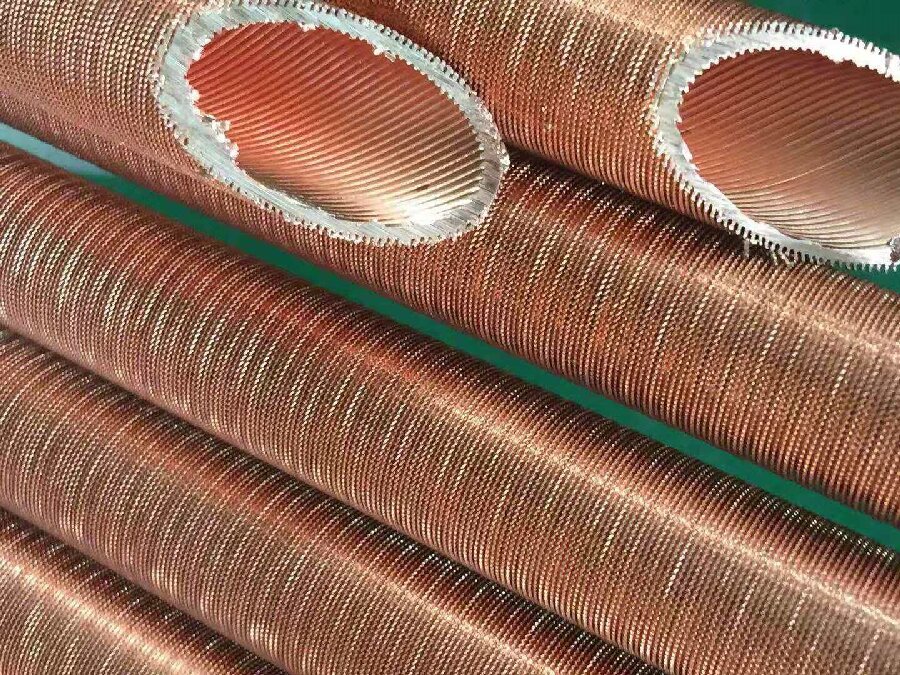
3/4" finned copper tubing refers to copper tubes with an outside diameter of 3/4 inch (19.05 mm) that feature metallic fins attached to the outer surface. The base tube is manufactured from high-purity copper — typically C12200 or C11000 grades — which offers exceptional thermal conductivity (around 401 W/m·K) and corrosion resistance. The fins are most often made of aluminum or copper and are bonded to the tube through processes such as extrusion, welding, or mechanical wrapping.
The finned design substantially increases the surface area available for heat exchange. For a standard 3/4" tube, adding fins can multiply the external surface area by a factor of 10 to 20 times, depending on fin density and geometry. This increase directly translates to higher heat transfer rates without requiring larger equipment footprints. The inside diameter (ID) of the tube is slightly smaller than 3/4" to accommodate fluid or gas flow and is determined by the wall thickness, which commonly ranges from 0.035" to 0.065".
Key takeaway: 3/4" finned copper tubing is not a single product but a category that includes various fin types, densities, and wall thicknesses. Selecting the right configuration depends on the operating conditions, fluid properties, and desired heat transfer coefficient.
Why 3/4" Finned Copper Tubing for Heat Transfer
The combination of coppers intrinsic thermal properties and the extended surface from fins makes 3/4" finned copper tubing exceptionally effective for heat transfer applications. Coppers thermal conductivity is among the highest of any commercial metal, surpassed only by silver. When heat needs to move quickly from a refrigerant or fluid to the surrounding air — or vice versa — copper provides the least thermal resistance.
Fins address the other side of the heat transfer equation. In air-cooled heat exchangers, the air-side thermal resistance is often the dominant factor limiting overall performance. By increasing the surface area available for air contact, fins reduce this resistance and allow more heat to be exchanged per unit of tube length. This is particularly important in applications where space is constrained or where high heat loads must be managed with limited airflow.
Thermal conductivity
Copper: ~401 W/m·K
Aluminum (fin material): ~237 W/m·K
Steel: ~50 W/m·K
Coppers high conductivity ensures rapid heat transfer from the fluid to the tube wall.
Surface area gain
Bare 3/4" tube: 0.196 ft²/ft
Finned 3/4" tube: 2.5–5.0 ft²/ft
Fins multiply the external surface by 12–25×, dramatically improving air-side heat exchange.
How 3/4" Finned Copper Tubing Performs
Performance of 3/4" finned copper tubing is determined by several interacting factors: fin density (fins per inch), fin height, fin thickness, and the bond quality between the fin and the tube. A typical configuration might have 8 to 14 fins per inch, with fin heights ranging from 3/8" to 5/8". Higher fin densities increase surface area but also increase air-side pressure drop, which may require more powerful fans.
The overall heat transfer coefficient (U-value) for a finned tube coil can range from 10 to 60 Btu/(hr·ft²·°F) depending on the fluid velocities, air velocity, and fin geometry. For 3/4" finned copper tubing used in typical HVAC evaporator or condenser coils, U-values in the range of 20–40 are common under design conditions. The tube-side heat transfer coefficient is generally high due to the turbulent flow promoted by the tubes internal surface and the fluid properties, so the overall performance is often air-side limited.
Operating pressure and temperature are also critical. Copper tubing of this size can typically withstand working pressures up to 300–400 psi for refrigeration applications, and temperatures from –40°F to 300°F without significant loss of mechanical properties. For higher pressures or corrosive fluids, the wall thickness can be increased or special alloys specified.
Applications of 3/4" Finned Copper Tubing
3/4" finned copper tubing is found across a broad spectrum of industries where heat exchange is essential. The most prominent applications include:
- HVAC Systems: This tubing is extensively used in evaporator coils, condenser coils, and heat exchangers for commercial and residential air conditioning. 3/4" finned copper tubing in HVAC systems typically operates with refrigerants such as R-410A or R-134a, where efficient heat rejection or absorption is critical to system COP.
- Refrigeration: In walk-in coolers, display cases, and industrial refrigeration units, 3/4" finned copper tubing facilitates the cooling process by transferring heat from the refrigerated space to the refrigerant. The finned surface ensures that even with low air velocities, adequate heat transfer occurs.
- Heat Exchangers: Air-to-air, air-to-liquid, and liquid-to-liquid heat exchangers all utilize finned copper tubes. In air-to-liquid applications, the tubes carry a liquid (water, glycol, or oil) while fins enhance heat transfer to or from the air stream.
- Radiators and Cooling Systems: Automotive and industrial radiators often employ finned copper tubing to dissipate engine heat. The combination of coppers thermal efficiency and the extended fin surface allows compact radiator designs that fit within tight engine compartments.
Beyond these core sectors, 3/4" finned copper tubing is also used in process heating, heat recovery systems, and specialty cooling equipment for electronics and power generation. Its versatility stems from the balance of thermal performance, mechanical durability, and cost-effectiveness.
3/4" Finned Copper Tubing Specifications
When specifying 3/4" finned copper tubing for a project, several parameters must be defined to ensure compatibility with the system design. The table below summarizes typical specifications for standard configurations. Note that custom dimensions and fin patterns are available from manufacturers.
| Parameter | Typical Value / Range | Notes |
|---|---|---|
| Outside Diameter (OD) | 0.750" (19.05 mm) | Nominal 3/4" |
| Inside Diameter (ID) | 0.652" – 0.680" (16.56 – 17.27 mm) | Depends on wall thickness |
| Wall Thickness | 0.035", 0.049", 0.065" | Common gauges |
| Fin Material | Aluminum (3003, 1100) or Copper | Aluminum is most common |
| Fin Height | 0.250" – 0.625" (6.35 – 15.88 mm) | Measured from tube surface |
| Fin Density | 8 – 14 fins per inch (FPI) | Higher FPI = more surface area |
| Fin Thickness | 0.012" – 0.020" (0.30 – 0.51 mm) | Thicker fins are more durable |
| Fin Type | L-type, LL-type, KL-type, integral | Different bonding methods |
| Tube Material | C12200 (phosphorized copper) or C11000 | High thermal conductivity |
| Max. Operating Pressure | 300 – 400 psi (2.07 – 2.76 MPa) | Varies with wall thickness |
| Max. Operating Temperature | –40°F to 300°F (–40°C to 149°C) | For standard applications |
For critical applications, additional testing such as hydrostatic pressure testing, eddy current inspection, or helium leak testing may be required. Always consult the manufacturers data sheets for specific product certifications and performance curves.
3/4" Finned Copper Tubing vs. Smooth Tubing
A common question is why 3/4" finned copper tubing is preferred over smooth (bare) copper tubing of the same diameter. The answer lies in the heat transfer requirements of the application. In air-cooled heat exchangers, the air-side heat transfer coefficient is typically an order of magnitude lower than the tube-side coefficient. This imbalance means that without fins, the tubes external surface would be the bottleneck to overall heat transfer.
Fins effectively "amplify" the external surface, bringing the air-side capacity closer to the tube-side capacity. For example, a 3/4" smooth tube has an external surface area of about 0.196 ft² per foot of length. With 10 fins per inch (each 1/2" high), the surface area increases to roughly 3.5 ft² per foot — an 18-fold increase. This allows the finned tube to transfer 3 to 5 times more heat per unit length than a bare tube under the same conditions.
However, finned tubes also have drawbacks. They are more expensive to manufacture, and the fins can accumulate dirt or debris over time, which reduces performance. They also increase air-side pressure drop, meaning fans must work harder. For applications where air-side resistance is not a concern or where the fluid is highly corrosive, bare tubes may still be the better choice. For most HVAC and refrigeration systems, though, the performance gains from 3/4" finned copper tubing far outweigh the additional costs.
Maintaining 3/4" Finned Copper Tubing
Proper maintenance of 3/4" finned copper tubing ensures long-term reliable operation and sustained heat transfer efficiency. The most common issue with finned coils is fouling — the accumulation of dust, fibers, grease, or biological growth on the fin surfaces. This layer of debris acts as an insulator, reducing heat transfer and increasing energy consumption.
- Regular Cleaning: Coils should be inspected at least twice a year, preferably before peak cooling and heating seasons. Compressed air (blowing from the inside out) or a soft brush can remove loose surface debris. For heavier fouling, a mild alkaline or neutral coil cleaner can be applied, followed by thorough rinsing with low-pressure water.
- Avoid High-Pressure Washing: High-pressure water jets can bend or crush aluminum fins, permanently reducing performance. If pressure washing is used, keep the nozzle at least 12 inches from the coil and use a wide spray pattern.
- Check for Corrosion: Copper is corrosion-resistant, but in aggressive environments (coastal areas, industrial zones), the fins may show signs of galvanic or pitting corrosion. Protective coatings or fin materials can mitigate this.
- Monitor Airflow: Restricted airflow due to clogged filters or blocked return air paths reduces the coils heat exchange capacity. Ensure filters are changed regularly and that the coil area is free of obstructions.
When replacing sections of 3/4" finned copper tubing, always use compatible materials and follow accepted brazing practices to avoid contamination or joint failure. For large systems, consider using a fin comb to straighten bent fins and restore airflow uniformity.
3/4" finned copper tubing continues to be a cornerstone of modern heat exchange technology, offering a proven balance of thermal efficiency, mechanical strength, and cost-effectiveness across a wide range of industrial and commercial applications.