


What is Floating Head Tube Bundle?
In the world of shell and tube heat exchangers, maintenance accessibility is often the deciding factor for long‑term operational profitability. While fixed tube sheets offer simplicity, they fail when thermal expansion or rigorous cleaning schedules come into play. This is where the floating head tube bundle becomes the industry gold standard.
At Lord Fin Tube, we specialise in manufacturing high‑durability floating head bundles that solve the three biggest challenges in heat transfer: thermal stress, fouling, and mechanical extraction.
What is a Floating Head Tube Bundle?
A floating head tube bundle is a removable assembly consisting of tubes, baffles, tie rods, and a stationary tube sheet at one end, but with a "floating" tube sheet at the opposite end. Unlike fixed bundles, the floating end is not welded to the shell. Instead, it moves freely (or slides within a small clearance) to accommodate differential thermal expansion between the tubes and the shell.
This design is mandated by TEMA (Tubular Exchanger Manufacturers Association) as Type "S" (Split Back Ring) or Type "T" (Pull‑Through), depending on the floating head mechanism.
Why Choose a Floating Head Design Over Fixed Tube Sheets?
If you are maintaining a refinery, chemical plant, or power generation facility, you have likely struggled with fixed tube sheet bundles. Here is why the floating head bundle wins:
- Thermal stress elimination – When process temperatures exceed 200 °F (93 °C) or have wide delta‑T swings, fixed tubes buckle or rupture. The floating head allows the tube bundle to expand and contract independently of the shell, eliminating axial stress.
- Complete mechanical cleanability – Fixed tube sheets require chemical cleaning or expensive on‑site lancing. With a floating head bundle, you can pull the entire tube bundle out of the shell. This allows for high‑pressure water jetting, mechanical brushing of both tube outsides (shell side) and insides (tube side), and full visual inspection.
- Replacement economics – When tubes fail, you do not always need a new heat exchanger. Replacing only the tube bundle reduces capital expenditure significantly compared to replacing the whole unit.
Critical Components of a Floating Head Tube Bundle
Not all floating head bundles are created equal. A high‑performance assembly relies on the precision of several key components. At Lord Fin Tube, we manufacture each of these parts according to applicable standards (e.g., TEMA, ASME, API) to meet the required service conditions.
All these components are precisely dimensioned so that the bundle can slide freely inside the shell while maintaining zero leakage at the floating end.
Comparison: Floating Head Bundle vs. U‑Tube Bundle
| Feature | Floating Head Bundle | U‑Tube Bundle |
|---|---|---|
| Tube shape | Straight tubes, fixed at both tube sheets | Tubes bent into a “U” shape; both ends fixed on one tube sheet |
| Tube‑side cleaning | Excellent – straight tubes allow mechanical cleaning from both ends. | Poor – internal cleaning of the U‑bend is very difficult; chemical cleaning only. |
| Shell‑side cleaning | Excellent – bundle can be pulled for full access. | Good – bundle can be pulled, but the U‑bend area may trap debris. |
| Thermal expansion | Fully accommodated by the floating head. | Accommodated by the U‑bend flexibility. |
| Tube replacement | Single straight tubes can be replaced individually. | A damaged tube often requires the whole bundle to be scrapped (bent tubes cannot be replaced economically). |
| Bundle cost | Higher (more parts: floating head cover, hook‑ring, second gasket). | Lower (only one tube sheet, no floating head). |
| Shell side pressure drop | Moderate – straight tubes allow standard baffles. | Higher – U‑bends force a different flow pattern, often increasing drop. |
| Typical applications | Crude pre‑heaters, fouling services, high‑pressure cleaning cycles. | Clean shell‑side services, gas coolers, hydraulic oil coolers. |
Verdict: Choose a floating head bundle when both shell side and tube side are prone to fouling and you need full mechanical cleanability. Choose a U‑tube bundle only when the tube side is clean and cost is the primary driver.
Common Tube Materials and Their Service Conditions
| Material | Best suited for | Limitations |
|---|---|---|
| Carbon steel (SA‑179, SA‑214) | Non‑corrosive fluids (oil, steam, water at moderate temperatures) | Poor corrosion resistance; not for acids, chlorides, or seawater. |
| Stainless steel (304, 316, 316L) | Corrosive environments (acids, chemicals, brackish water); 316L resists chlorides better. | Lower allowable stress at high temperature (>600 °C). |
| Duplex / Super duplex (2205, 2507) | High‑chloride, sour service (offshore, desalination, seawater cooling) | Higher cost; requires careful welding. |
| Titanium (Gr.2, Gr.12) | Extreme corrosion (seawater, wet chlorine, aggressive brines) | Very expensive; limited availability. |
| Alloy 400 (Monel) | Hydrofluoric acid, reducing acids, seawater. | Not for strong oxidising acids. |
| Alloy C‑276 (Hastelloy) | Severe corrosion (wet HCl, hot sulfuric acid, chlorine dioxide) | Very high cost; heavy weight. |
| Chrome‑Moly (T11, T22) | High‑temperature services (400–600 °C) such as refinery heaters, H₂ coolers. | Poor corrosion resistance; needs PWHT. |
For high‑pressure applications (above 100 bar), thicker tube walls and higher strength materials like duplex or chrome‑moly are used. The floating head design itself does not limit pressure – the gasketed joints are the weak point, so proper gasket selection and bolting torque are essential.
Common Applications for Floating Head Bundles
- Petrochemicals: Crude oil pre‑heaters (where asphaltenes coke on surfaces).
- HVAC: Large centrifugal chiller condensers and evaporators.
- Pharmaceuticals: Sterile processes requiring frequent sanitisation cycles.
- Hydrogen coolers: Wide temperature swings require floating heads to prevent stress cracking.
Replacement Strategy and Manufacturing Approach
One of the most common questions we receive is: “My floating head bundle has failed. Do I buy a new exchanger or just a new bundle?”
Buy a new bundle if: the shell passes hydrostatic testing (no corrosion), the channel and bonnet are intact, or you need a different tube material (e.g., upgrading from carbon steel to 316 SS or titanium).
Buy a new exchanger if: the shell is heavily pitted or eroded, or the floating head seat is damaged (rare, but fatal).
How we work at Lord Fin Tube: We primarily manufacture according to customer drawings. You provide the detailed drawing of the required floating head bundle, and we produce it exactly to your specifications. If you need a complete heat exchanger (shell plus bundle), we can also supply that based on your design drawings. We do not perform reverse engineering or laser measurement unless explicitly requested. Our strength is precision manufacturing following your established drawings, ensuring a perfect fit and reliable performance.
Maintenance Best Practices for Floating Head Bundles
- Extraction care: Always use a hydraulic bundle puller aligned with the shell axis. Angular stress bends the floating head studs.
- Gasket inspection: Replace the floating head gasket every time you dismantle the unit. Reusing these gaskets is the #1 cause of internal bypass leakage.
- Tube vibration: During annual inspections, check for tube fretting at the baffle cuts. If found, increase baffle thickness or add tie rods.
- Corrosion monitoring: Install corrosion coupons near the floating head end. This area often experiences stagnant flow, leading to under‑deposit corrosion.
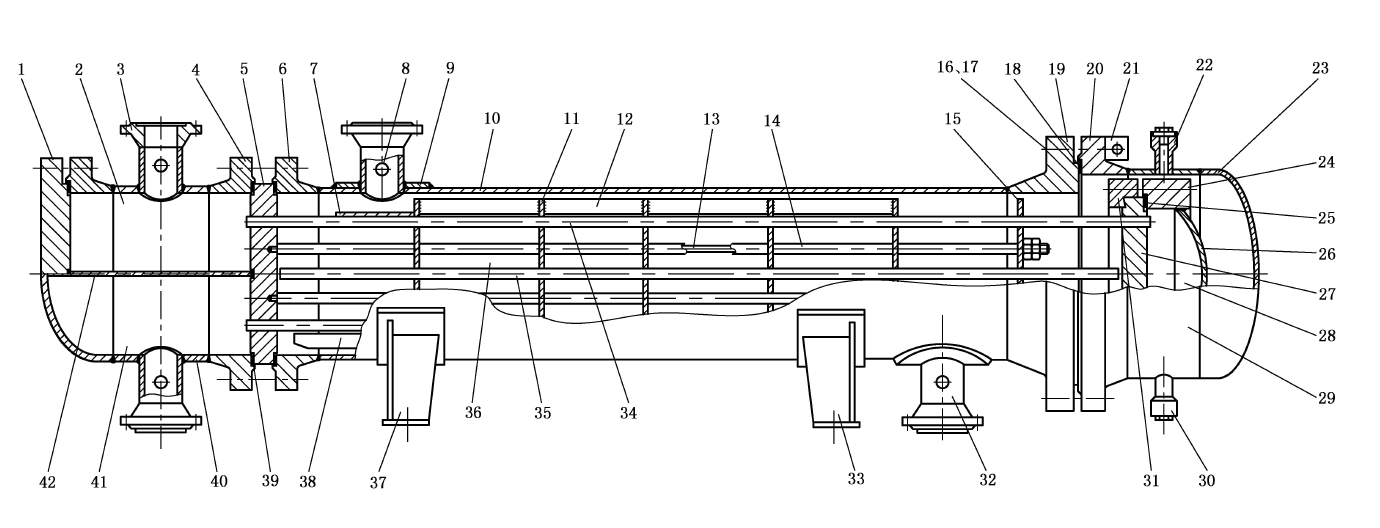
* Replace with your own bundle image – ready for any custom floating head heat exchanger visual