


Lord Fin Tube-H-type (square) Finned Tube
2018-11-16Leave a message
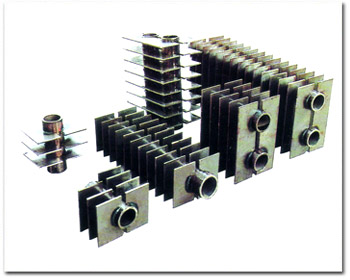
H-type (square) Finned Tube
H-Type Finned-Tube Economizer Overview
The H-type finned-tube economizer is a high-efficiency heat exchange component assembled with H-type finned tubes, also known as butterfly tubes. Below are the key specifications, characteristics, and applications of this economizer.
H-type (square) Finned Tube dimensions & materials
- • Dimensions: 32*4, 32*5, 38*4, 38*5, 42*5, 48*5, 51*5, 51*6, etc.
- • Pipe diameters: 25~65 mm, wall thickness > 3 mm.
- • Material options: Carbon steel, stainless steel, ND steel, alloy steel, and more.
| Tube O.D. (mm) | Wall (mm) | Fin height (mm) | Fin pitch (mm) | Material grade |
|---|---|---|---|---|
| 32 | 4.0 | 12 | 10 | Carbon steel |
| 38 | 4.5 | 14 | 12 | Stainless 304 |
| 42 | 5.0 | 15 | 12 | ND steel |
| 48 | 5.0 | 16 | 14 | Alloy steel |
| 51 | 5.5 | 18 | 15 | Carbon steel |
H-type (square) Finned Tube structure & airflow
- Basic forms: "H" and double "H" types, arranged in line.
- Equalized airflow: H-type fins divide the space, equalizing airflow and minimizing wear.
- Soot blowing efficiency: Straight passages on both sides optimize soot blowing.
Why choose H-type (square) Finned Tube?
Key performance advantages
- Increased heat exchange area – replacing bare tube economizers with H-type finned tubes increases area, reducing tube count and optimizing flue gas flow.
- Reduced flue gas velocity & wear – fin arrangement centralizes fly ash, further reducing erosion.
- Structural rigidity – double-tube "double-H" type provides stability for long tube rows.
- Compact & lightweight – design reduces overall weight, leading to cost savings.
- Energy efficiency – significant reduction in heat loss, consuming only 2–4 kW per ton of steam.
- Simple operation & maintenance – assembled as a whole, few moving parts, easy installation.
H-type (square) Finned Tube operating parameters
Steam pressure: 0.5 – 4 MPa
Steam form: Saturated / Superheated
Cycle mode: Natural / Forced circulation
Power range: 600 kW – 15,000 kW
Waste heat temp: > 300°C
What affects H-type (square) Finned Tube performance?
- Fin density & geometry – higher fin pitch improves heat transfer but may increase fouling; H-shape balances both.
- Tube material – corrosion resistance (ND steel, stainless) directly impacts lifespan in acidic flue gas.
- Flue gas velocity – optimal range 8–12 m/s minimizes erosion while maintaining heat transfer.
- Installation orientation – horizontal or vertical arrangement affects ash deposition and cleaning frequency.
Which industries use H-type (square) Finned Tube?
- Waste heat recovery in power generation (600 kW – 15 MW units).
- Industrial boilers & cogeneration plants.
- Marine & offshore heat exchangers.
- Chemical processing & refinery economizers.
How to maintain H-type (square) Finned Tube efficiency?
- Regular soot blowing (steam or air) to keep fin passages clear.
- Inspect for fly ash bridging between fins – H-shape reduces bridging risk.
- Monitor flue gas temperature drop across the economizer to detect fouling.
- Use retubing services when wall thinning exceeds 20%.
H-type (square) Finned Tube services & supply
- Economizer retubing & heat exchanger retubing
- Manufacturing of H-Fin, Pin Tubes, Stub Tubes, Helical Fin Tubes & Double H-Fin Tubes
- Condensers for fresh and sea water applications
- Condenser tubes, boiler tubes, spare parts for all burner makes
- Voyage, overseas, and local boiler repair & inspection
| Material | Corrosion resistance | Max. temp (°C) | Typical application |
|---|---|---|---|
| Carbon steel | Moderate | 450 | Low-sulfur flue gas |
| Stainless 304 | Good | 650 | Corrosive / wet gas |
| ND steel | Excellent (acid) | 400 | High-sulfur fuel |
| Alloy steel | High | 700 | High-temp superheaters |
Related keywords: Fin tubes, Finned tube, Finned Pipe, Helical Finned Tubes, Solid fin tubes, Serrated finned tube, Helical Serrated Finned Tubes, Tubos Aletados.
For detailed specifications, visit H-type (square) Finned Tube product page.