


Lord Fin Tube-Main Finned Tube Types Introduction
Main Finned Tube Types
Heat exchangers that handle air, flue gas or any other gas on the outside of a tube rarely perform well with a bare pipe. The gas-side film coefficient is low, sometimes less than one twentieth of the coefficient on the liquid side, and the whole unit ends up oversized because of it. Adding fins to the outside of the tube is the usual answer. A Finned Tube widens the effective surface without widening the pressure envelope, so the same shell or the same duct can carry far more duty.
What separates one finned tube from another is not the fin shape alone. It is the way the fin is joined to the base tube, the pair of materials used, and the temperature that joint can survive. A wound fin behaves differently from an embedded fin under thermal cycling, and a welded fin tolerates conditions that would destroy an adhesive or a soft metal joint. The sections below walk through the main types Lord Fin Tube produces, what each one is good at, and where each one tends to be specified.
Finned Tube Types and Fin-to-Tube Joints
Put the manufacturing method aside for a moment and most finned tubes fall into four joint families.
- Wound — the fin strip is wrapped onto the tube under tension and held by hoop force. Cost is low, but the ceiling on temperature is set by how long that contact pressure lasts and how closely the two metals expand.
- Rolled — the fin is extruded out of a thicker tube wall or an aluminium sleeve, so fin and tube are one piece of metal. Contact pressure is high and there is no separate joint at the fin root.
- Embedded — the fin is pushed into a groove cut in the tube wall, then rolled near the root to lock it. Pull-off strength is high and the temperature ceiling sits above that of a wound fin.
- Welded or brazed — the fin is attached by high frequency welding or vacuum brazing. The joint becomes metallurgical, which is why these products tolerate high heat along with acid, alkali and salt exposure.
Finned Tube Types and Their Working Details
Elliptical Winding Fin Tube
It is a patent product independently developed by the company. It adopts strong winding technology, with stable spacing and firm connection between the fins. It can be galvanized and brazed on the surface according to different application occasions. With the characteristics of high heat transfer efficiency and low wind resistance, the heat transfer coefficient can be increased by 25% and the air resistance can be reduced by 15-25% compared with the same cross-section pipe.
Rectangular Elliptical Hot-Dipped Zinc Fin Tube
High-speed stamping tandem hot-dipped zinc technology is adopted. The distance between the fins is stable, the zinc layer is uniform, and the fins are closely combined. It can be widely used in power plant air coolers, heaters and air heaters. A detailed product sheet is available on the rectangular elliptical hot-dipped zinc fin tube page.
External Longitudinal Finned Tube
Using high frequency welding technology, U-shaped fin and steel pipe are soldered firmly, fin distribution is uniform, no contact thermal resistance, finning ratio can reach more than 10, especially suitable for petrochemical industry shell and tube heat exchanger, shell side medium viscosity is high, flow rate is low working conditions. The full specification sits on the longitudinal finned tube page.
L-Type Aluminium Fin Tube
The base tube is externally knurled, and then the L-type aluminium fin is rolled twice at the root to strengthen the contact of the fin. The contact area increases by about 50%, the contact thermal resistance is small, and the heat transfer performance is high. It can withstand repeated cold and hot cycles without loosening.
Bimetallic Rolled Fin Tube (E-Type Fin Tube)
Special equipment is used to roll out fins on the aluminium tube. The contact pressure of the fins is 4 times higher than that of the wound tube. The permissible temperature of the medium can reach 350 C. It has strong resistance to atmospheric corrosion and heat shock.
G-Type Finned Tube
It adopts advanced production equipment of Mcelroy Company, USA. It has advanced slotting and embedding technology, stable spacing, firm embedding, no less than 70N pull-off force, permissible temperature of medium up to 400 C. It has strong temperature resistance and heat shock resistance, and is widely used in petrochemical air coolers.
Nickel-Based Infiltrated Layer Brazed Finned Tube
The welding rate of base tube and fin is 100%, with no contact thermal resistance. The welding position is smooth, the nickel infiltrated layer is uniform, compact and high in hardness, and there is no possibility of peeling or falling off. It resists high and low temperature dew point corrosion, erosion wear, ash deposition and scaling, and can be used long term in acid, alkali, salt and other corrosive atmospheres.
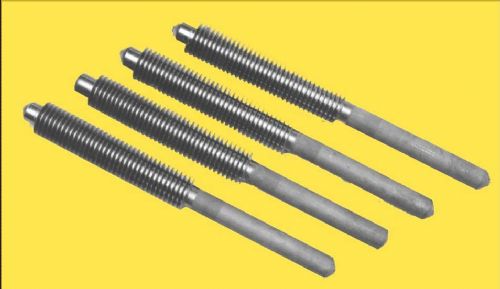
Heat Pipe
It is a kind of superconducting heat transfer element. Nickel-based brazed finned tube is used to transfer heat through the phase transformation of heat conducting medium in the closed tube. The product passes through strict inner wall passivation and vacuum production process. It has the characteristics of high vacuum, good isotherm, wear resistance, not easy to accumulate ash and long service life. It is widely used in waste heat recovery of petrochemical, textile and boiler furnaces.
Finned Tube Types Side by Side
| Finned Tube Type | How the Fin Is Fixed | Medium Temperature | Where It Fits Best |
|---|---|---|---|
| Elliptical Winding Fin Tube | Strong winding; surface galvanized or brazed when the occasion requires it | Set by the base tube and fin materials | Duties where both heat pickup and fan power matter. Heat transfer coefficient up 25%, air resistance down 15-25% against a same cross-section pipe |
| Rectangular Elliptical Hot-Dipped Zinc Fin Tube | High-speed stamping, tandem hot-dipped zinc | Set by the zinc layer and base tube | Power plant air coolers, heaters, air heaters |
| External Longitudinal Finned Tube | High frequency welding of a U-shaped fin to the steel pipe | Set by the steel pair | Shell and tube heat exchangers in petrochemical service where the shell side medium is viscous and slow. Finning ratio above 10 |
| L-Type Aluminium Fin Tube | Knurled base tube, fin root rolled twice | Set by the aluminium fin | Services with repeated cold and hot cycles. Contact area up about 50% |
| Bimetallic Rolled Fin Tube (E-Type) | Fins rolled out of the aluminium tube; contact pressure 4 times that of a wound tube | Up to 350 C | Atmospheric corrosion and heat shock |
| G-Type Finned Tube | Slotting and embedding, pull-off force not below 70 N | Up to 400 C | Petrochemical air coolers |
| Nickel-Based Infiltrated Layer Brazed Finned Tube | 100% brazed joint, no contact thermal resistance | Set by the base tube and nickel layer | Acid, alkali and salt atmospheres, dew point corrosion, erosion wear, ash deposition and scaling |
| Heat Pipe | Closed tube, heat carried by phase change of the working medium | Set by the working medium | Waste heat recovery in petrochemical, textile and boiler furnace service |
Finned Tube Types and Selection Points
Two conditions decide most of the choice: how hot the medium outside the tube runs, and what is travelling past the fins while it runs.
- Temperature is the first gate. A bimetallic rolled fin tube with aluminium fins sits comfortably up to a medium temperature of 350 C. A G-type finned tube reaches 400 C because the fin is embedded into the tube material. Above that, or where temperature swings quickly, a brazed or welded joint is needed.
- Corrosion changes the answer. Hot-dipped zinc handles ordinary atmospheric exposure. In acid, alkali or salt service, or where flue gas drops below its dew point, a nickel-based infiltrated layer brazed fin tube is the safer pick, since the joint is 100% welded and the layer is uniform and will not peel.
- Fouling belongs on the air resistance side of the calculation. Denser fins give more surface but also catch more ash. Where dust loading is heavy, a finned tube with a wider gap between fins usually outlasts a tube with more surface.
- Fan power follows the tube shape. An elliptical finned tube presents a narrower profile to the air stream, so the wake and the pressure drop shrink. Against the same cross-section round pipe, air resistance drops by 15-25%.
- Viscous shell side media want longitudinal fins. When the shell side fluid moves slowly and carries high viscosity, it travels along the fin channels better than across a helical wrap. That is why long straight fins are specified for petrochemical shell and tube heat exchangers.
Finned Tube Types and Common Questions
What makes one finned tube type better than another for a given duty?
Mostly the way the fin is joined to the base tube, and how much temperature that joint survives before it fails. A wound fin is held by tension and behaves well at moderate heat. A G-type fin is embedded into a groove cut in the tube wall and accepts medium temperatures up to 400 C. A nickel-based infiltrated layer brazed fin forms a 100% welded joint and holds up in acid, alkali and salt atmospheres. Fin shape affects the air side, but the joint decides whether the tube can be used at all.
How high can the working temperature of a finned tube go?
It depends on the joint. A bimetallic rolled fin tube with aluminium fins rolled from the tube allows a medium temperature of 350 C. A G-type finned tube goes to 400 C because the fin is embedded into the tube material instead of being wound around it. Anything above that calls for a brazed or welded joint.
Why does an elliptical finned tube cut fan power?
An elliptical tube presents a narrower profile in the direction of air flow, so the wake and the pressure drop behind it are smaller. Against the same cross-section round pipe, air resistance falls by 15 to 25 percent while the heat transfer coefficient rises by 25 percent.
When is a longitudinal finned tube used instead of a helical one?
When the shell side medium is viscous and moves slowly. Long straight fins let the fluid travel along the fin channels rather than across them. Shell and tube heat exchangers in the petrochemical industry are the classic case, where the finning ratio can reach more than 10.
Finned Tube Types Available from Lord Fin Tube
- Brazed Copper Finned Tube
- Laser Welding Finned Tube
- Longitudinal Finned Tubes
- Rectangular/HH Finned Tube
- Embedded Finned Tube
- HFW Solid Finned Tube
- HFW Serrated Finned Tube
- Extruded Serrated Finned Tube
- Finned Tube Heat Exchangers
Keywords: Fin tubes, Finned tube, Finned Pipe Helical Finned Tubes, Solid fin tubes, Serrated finned tube, Helical Serrated Finned Tubes, Tubos Aletados