


What are the HRSGs?
Part I: What are the HRSGs?
A waste heat boiler, professionally known as a Heat Recovery Steam Generator (HRSG), is essentially a large-scale, high-efficiency gas-water/steam heat exchange system. Unlike the familiar traditional coal-fired or gas-fired boilers, an HRSG itself has no combustion equipment. Its core mission is to recover the waste heat contained in the high-temperature exhaust gases discharged from industrial processes or power equipment (such as gas turbines, internal combustion engines, industrial furnaces), and convert this waste heat into valuable steam or hot water. Hence, it is often referred to as a waste heat boiler or heat recovery boiler.
The essence of the waste heat boiler concept lies in waste heat recovery and energy upgrading. It does not consume new fuel but acts as an energy hunter, capturing the medium- to low-grade thermal energy that would otherwise be discharged into the atmosphere and wasted. Subsequently, through a precise heat exchange process, it transfers this thermal energy to water, converting it into high-grade steam energy that can be used for power generation, driving mechanical equipment, or industrial heating. This process achieves cascading utilization of energy and is a exemplary technology for the circular economy and energy conservation and emission reduction.
Part II: How HRSGs Work?
The working principle of an HRSG follows classical thermodynamic and heat transfer laws. The process can be clearly divided into two main lines: the flue gas side and the working fluid (water/steam) side.
2.1 Flue Gas Side Process: Heat Release
High-temperature exhaust gas (typically ranging from 200°C to over 600°C) flows horizontally or vertically through the rectangular duct formed inside the HRSG, driven by an induced draft fan. The exhaust gas sequentially passes through a series of heat exchange modules composed of tube bundles. During this flow, the exhaust gas temperature gradually decreases, and its sensible heat is transferred to the working fluid inside the tubes via convection and radiation. Finally, the low-temperature exhaust gas, having had most of its heat "extracted" (usually cooled to above the dew point to prevent corrosion), is discharged into the atmosphere via the chimney.
2.2 Working Fluid Side Process: Energy Upgrading
Feedwater undergoes a complete metamorphosis from water to superheated steam on the other side of the system:
Preheating (Economizer): The high-pressure feedwater pump sends water first to the economizer located in the low-temperature zone of the flue gas path. Here, the water is preheated to a temperature close to but below saturation.

Evaporation (Evaporator): The preheated water enters the evaporator located in the higher-temperature zone of the flue gas path (typically forming a circulation loop with the steam drum). The water absorbs a large amount of latent heat, begins to boil, and turns into saturated steam (a steam-water mixture). In natural circulation HRSGs, stable natural circulation is established by the density difference between the downcomers (cooler water) and the risers (steam-water mixture).
Steam-Water Separation (Steam Drum): The steam-water mixture enters the steam drum, where internal high-efficiency cyclone separators remove water droplets from the steam, producing dry saturated steam. The separated water rejoins the circulation.
Superheating (Superheater): The dry saturated steam is directed to the superheater located in the highest-temperature zone at the flue gas inlet. Here, the steam absorbs more heat, its temperature continues to rise, and it becomes superheated steam with a higher capacity for work. It is then delivered to the steam turbine or process user.

Reheating (Reheater - Optional): In high-efficiency combined cycle units, steam exhausted from the high-pressure cylinder of the steam turbine, having performed some work, is returned to the reheater within the HRSG. It is reheated to increase its temperature and enthalpy before being sent back to the intermediate/low-pressure cylinders of the steam turbine to continue performing work, thereby improving overall cycle efficiency.

Part III: Main Types of HRSGs
Depending on different design, layout, and application requirements, HRSGs are primarily classified in the following ways:
3.1 Classification by Layout
| Type | Characteristics | Typical Applications |
|---|---|---|
| Vertical (Tower Type) | Heating surface modules are arranged vertically, with flue gas flowing upward. Compact structure, small footprint, but maintenance space may be limited. | Retrofit projects with space constraints or specific industrial settings. |
| Horizontal | Heating surface modules are arranged horizontally, with flue gas flowing horizontally. This is the most mainstream and versatile layout. Facilitates modular design, manufacturing, transportation, and on-site installation/maintenance, offering good accessibility. | The vast majority of gas turbine combined cycle power plants and large industrial waste heat recovery projects. |
3.2 Classification by Water Circulation Method
| Type | Principle | Pros | Cons |
|---|---|---|---|
| Natural Circulation | Relies on the density difference between the steam-water mixture in the evaporator (risers) and the cooler water in the downcomers as the driving force for circulation. | Simple system, reliable operation, no circulating pump needed, low operating cost. | Slower startup, requires certain elevation for layout, design pressure is usually limited. |
| Forced Circulation | A circulating water pump is added to the downcomer system to provide additional circulation driving force. | Flexible layout, not restricted by height; faster start/stop speeds; suitable for higher pressures. | More complex system; adds pump investment, operation, maintenance costs, and potential failure points. |
| Once-through | Feedwater passes sequentially and once through all heating surfaces. There is no steam drum or circulation loop; water is completely converted to steam directly in the evaporation section. | Simplest structure, lightweight, extremely fast start/stop, no pressure limitation. | Extremely high requirements for feedwater quality, complex control, poor load regulation characteristics. |
3.3 Classification by Steam Pressure Level
Single-Pressure HRSG: Produces steam at only one pressure level. Simple system, suitable for occasions with lower heat source temperatures or less demanding requirements.
Dual-Pressure / Triple-Pressure HRSG: This is the standard configuration for large, high-efficiency combined cycle power plants. The system contains independent high-pressure, intermediate-pressure (and optionally low-pressure) evaporation sections and superheaters, capable of producing steam at multiple pressures. This allows for a finer match with the flue gas cooling curve, significantly lowering the exhaust gas temperature, thereby recovering waste heat close to the theoretical limit and markedly improving overall efficiency.
3.4 Classification by Presence of Reheat
Non-Reheat HRSG: Steam expands and performs work in the turbine in a single stage.
Reheat HRSG: Contains a reheater module. As mentioned earlier, the reheat cycle increases the work capacity of the steam, boosting the net efficiency of a combined cycle unit by an additional 1-2 percentage points. It is a key feature of modern high-performance HRSGs.
Part IV: From Large Power Plants to the Heart of Industry
The application scenarios for HRSGs are extremely broad, covering almost all industries that generate medium- to high-temperature exhaust gas:
Gas-Steam Combined Cycle Power Plants
This is the most classic and large-scale application of HRSGs. It recovers exhaust gas from gas turbines at approximately 500-600°C to generate high-temperature, high-pressure steam that drives a steam turbine, increasing overall power generation efficiency from about 40% to over 60%. It is a pillar technology for efficient, low-carbon power generation.
Petrochemical and Steel Metallurgy Industries
In these energy-intensive sectors, HRSGs are central to achieving process energy savings. Recovering waste heat from various process exhaust streams—from catalytic cracking units and reformer furnaces to blast furnaces, coke ovens, and converters—the steam generated by HRSGs drives compressors, pumps, or generates electricity, significantly reducing production energy consumption.
Waste Incineration and Industrial Waste Liquid Treatment
In this field, HRSGs are not only about energy recovery but also environmental protection. They handle complex, corrosive incineration flue gases, converting waste into green electricity while achieving harmless treatment, perfectly combining energy recovery with environmental governance.
Industrial Kilns in Cement, Glass, Ceramics, etc.
Kilns in these industries emit large amounts of medium-temperature flue gas. Installing HRSGs for waste heat power generation or heating is an effective measure for industrial enterprises to reduce costs, improve efficiency, and decrease reliance on external energy sources.
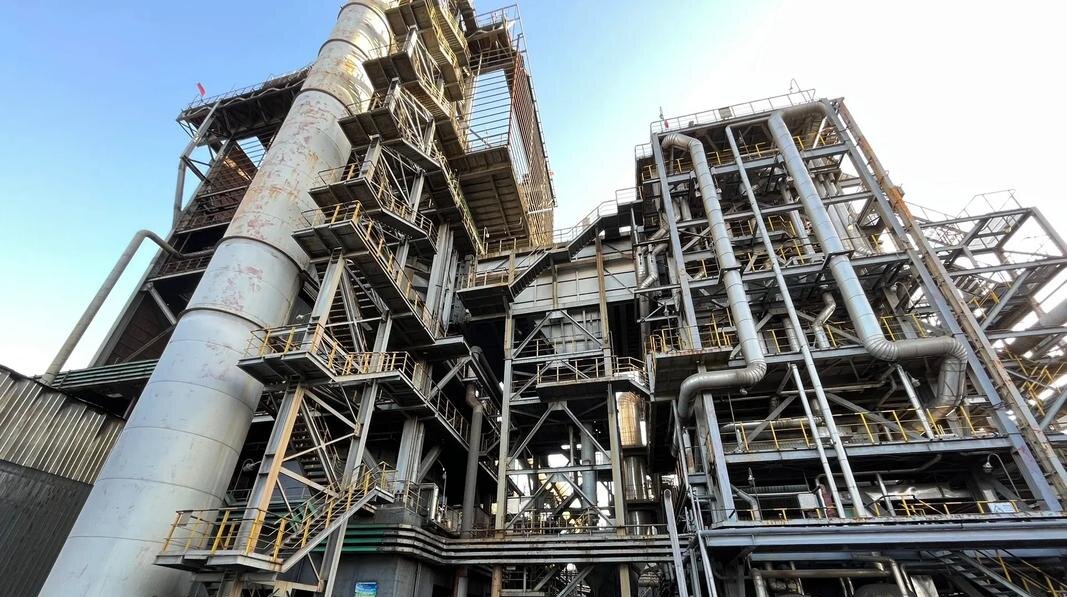
Designing a high-performance HRSG is a systems engineering task involving multiple disciplines. Beyond the basic principles and type selection discussed above, heat exchanger engineers must also focus deeply on several critical aspects to ensure efficiency, reliability, and longevity.
Off-Design & Dynamic Response
An HRSG must handle rapid changes in upstream gas turbine or process load. Engineers need to simulate various transient conditions (e.g., fast starts, load rejection) to ensure the metal temperatures and stresses of all heating surfaces remain within safe limits and to prevent economizer steaming at low loads.
Flow & Temperature Field Optimization
Using Computational Fluid Dynamics simulations, optimize duct shapes and flow guide designs to ensure flue gas flows uniformly across all tube bundles, avoiding localized high-velocity zones causing erosion, or localized low-velocity zones causing ash accumulation and uneven heat transfer.
Materials Science & Life Management
Select materials scientifically based on threats in different zones (high-temperature corrosion, low-temperature corrosion, erosion). For example, high-chromium-nickel alloys might be chosen for the high-temperature section of the superheater; enamel-coated tubes or ND steel resistant to sulfuric acid dew point corrosion might be used for the low-temperature section of the economizer.
Modularity & Maintainability
Decompose the massive HRSG into factory-prefabricated, easily transportable modules, significantly reducing on-site installation time. Simultaneously, the design must consider ease of future maintenance, such as reserving sufficient inspection space and access.