


Lord Fin Tube-Heat transfer spiral finned tube
Heat Transfer Spiral Finned Tube
Spiral finned tubes represent a significant advancement in thermal engineering, designed to optimize the exchange of thermal energy between fluids and their environment. These components are integral to systems where space, efficiency, and reliability are paramount. Their unique geometry provides a substantial increase in effective surface area without a proportional increase in footprint.
Heat Transfer Spiral Finned Tube Design
The core principle involves a base tube, which can vary in diameter and wall thickness, with a continuous metallic fin helically wound around its exterior. This winding process creates a consistent, screw-like profile. The pitch, height, and thickness of the fin are precisely calculated to balance between maximizing surface area and maintaining structural integrity under operational stresses like fluid pressure and thermal cycling.
Design Focus: The helical design isnt random; its engineered to create turbulence in the external fluid flow (typically air or gas). This turbulence breaks up the laminar boundary layer, a common insulator against heat flow, thereby dramatically enhancing the convective heat transfer coefficient.
Heat Transfer Spiral Finned Tube Materials
Material selection is driven by the operating environment, including temperature extremes, corrosive elements, and pressure requirements. Compatibility between the fin and base tube material is critical to prevent galvanic corrosion.
| Material | Typical Applications | Key Properties for Heat Transfer |
|---|---|---|
| Carbon Steel | Economical air heaters, boiler economizers, non-corrosive gas applications | Good thermal conductivity, cost-effective, durable under high pressure. |
| Stainless Steel (304, 316) | Chemical processing, food & beverage, marine environments, exhaust gas boilers | Excellent corrosion resistance, maintains strength at high temperatures, hygienic. |
| Aluminum | Air conditioning (AC) coils, air-cooled chillers, compressed air aftercoolers | Excellent thermal conductivity, lightweight, naturally corrosion-resistant. |
| Duplex & Special Alloys | Offshore platforms, severe sour gas service, high-chloride environments | Superior corrosion and pitting resistance, very high strength. |
Heat Transfer Spiral Finned Tube Performance Factors
Performance extends beyond simple material choice. For procurement specialists, understanding these interlinked factors ensures the selected tube meets the specific duty point of the heat exchanger.
- Fin Density (Fins per inch): Higher density offers more surface area but increases air-side pressure drop and risk of fouling. A balance is required.
- Fin Height: Taller fins increase area but can reduce fin efficiency if the temperature drop along the fin is too great.
- Bond Integrity: The connection between fin and tube (e.g., tension-wound, embedded, welded) must ensure minimal thermal contact resistance. A loose fin acts as an insulator.
- Tube Layout: Staggered vs. in-line arrangements in the bundle affect flow characteristics and overall heat transfer coefficient.
For Procurement Consideration
When evaluating suppliers for spiral finned tube, request data on tested thermal performance (U-value or overall heat transfer coefficient) under conditions similar to your application. Mill certificates for material traceability and samples for bond integrity testing (like thermal shocking) are also valuable checks.
Heat Transfer Spiral Finned Tube Selection Guide
Matching the tube to the application is critical. Here’s a breakdown focused on common industrial sectors.
| Industry Sector | Primary Function | Typical Tube Specification Hints |
|---|---|---|
| Power Generation (HRSG, Air Cooled Condensers) | Waste heat recovery, steam condensation | Carbon or stainless steel, moderate fin density, designed for high-temperature exhaust gas with particulate matter. |
| HVAC&R | Air cooling/heating, refrigerant condensation/evaporation | Copper or aluminum tubes with aluminum fins for optimal conductivity and corrosion resistance in moist air. |
| Oil & Gas (Production, Refining) | Cooling process streams, gas dehydration, fuel gas heating | Stainless or duplex steel, often with extruded or welded fins for high-pressure hydrocarbon service and sour environments. |
| Industrial Manufacturing (Chemical, Plastic) | Process cooling, reactor temperature control, air pre-heating | Material specific to process chemistry (e.g., Teflon-coated for extreme corrosion), focus on cleanability. |
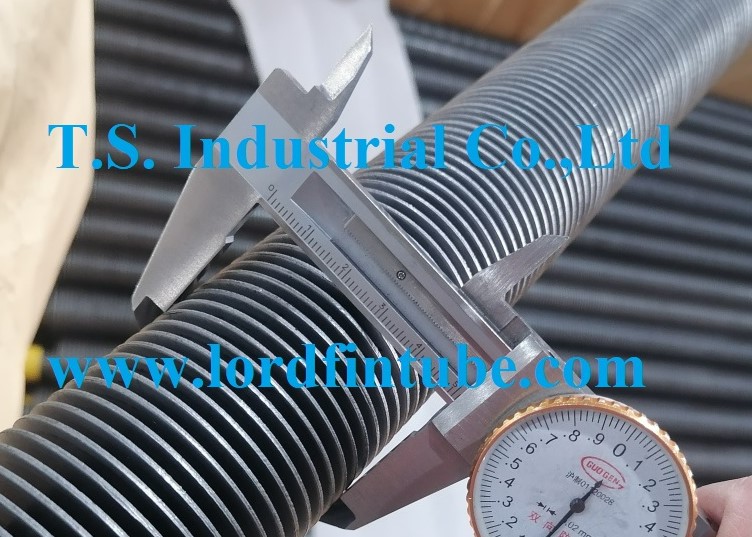
Figure: A detailed view of a spiral finned tube bundle, illustrating the consistent helical fin geometry and typical staggered arrangement for optimal airflow and heat transfer.
Heat Transfer Spiral Finned Tube Maintenance
Long-term performance depends on maintaining the air-side surface. Fouling from dust, insects, or process contaminants acts as insulation. A maintenance protocol should include:
- Regular Inspection: Visual checks for debris buildup and fin damage.
- Cleaning Methods: Use of compressed air, high-pressure water jets (carefully, to avoid bending fins), or chemical cleaning for specific deposits.
- Accessibility: Design the heat exchanger layout with adequate space for cleaning access on all sides.
Technical Note: The thermal performance of a finned tube is often expressed as the "fin effectiveness" or "overall surface efficiency." This metric accounts for the temperature gradient along the fin. A well-designed spiral finned tube will have a high surface efficiency, often above 70-80%, meaning the fins are working effectively to transfer heat.