


Integral Finned Tubes vs Welded Finned Tubes: Performance Comparison & Engineering Selection Guide
Heat Transfer Technology Analysis
Finned tubes are core components of heat exchange systems, widely applied in power generation, chemical engineering, HVAC, industrial cooling, and waste heat recovery. By expanding the heat transfer surface area of base tubes, finned tubes significantly improve the efficiency of heat exchange between fluids. Integral finned tubes and welded finned tubes are the two most mainstream types in industrial applications, differing fundamentally in manufacturing processes, structural characteristics, and comprehensive performance. This article systematically compares their performance in heat transfer efficiency, structural durability, environmental adaptability, operational stability, and economic benefits, providing technical references for engineering selection and practical application.
1. Fundamental Structural & Manufacturing Differences
The core performance gap between the two tube types originates from their distinct production processes and structural integration modes.
Integral Finned Tubes
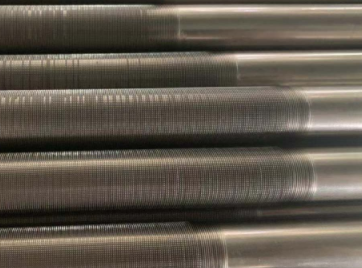
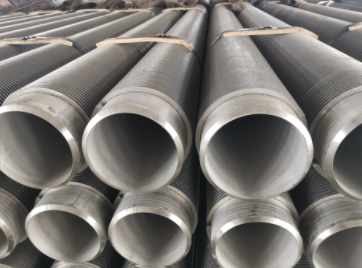
Also known as extruded or rolled integral finned tubes, manufactured by extruding or rolling the outer wall of the integral base tube. The fins and the base tube are formed as a single monolithic structure with no splicing, welding gaps, or interface separation. The entire tube body maintains consistent metal integrity, achieving a 100% metallurgical integration structure without any secondary connection points.
Welded Finned Tubes
Typically high-frequency welded finned tubes, produced by separately manufacturing strip-shaped fin materials and welding them helically onto the surface of prefabricated base tubes. The fins and base tube are independent components connected by high-frequency resistance welding. Although the welding process forms a firm metallurgical bond, an obvious welding interface exists between the fin root and the tube wall, retaining inherent structural discontinuity.
2. Heat Transfer Performance Comparison
Heat transfer efficiency is the most critical performance indicator of finned tubes, and the interface thermal resistance determines the fundamental difference between the two products.
Integral Finned Tubes
Eliminate interface thermal resistance completely. Integrated structure ensures unobstructed heat conduction from the base tube wall to the fin tip, with continuous and stable thermal conductivity. Thermal resistance as low as 0.005–0.01 ㎡·K/W. Test data shows that their heat transfer efficiency is 30%–60% higher than that of welded finned tubes under same working conditions.
Welded Finned Tubes
Suffer from unavoidable interface thermal resistance at the welding joint. Tiny gaps and welding residual stress at the fin-tube connection block heat transfer paths, resulting in severe heat loss. Long-term operation exacerbates gap expansion due to thermal expansion and contraction, causing continuous attenuation of heat transfer efficiency.
3. Structural Strength & Mechanical Performance
Vibration & Fatigue Resistance
Integral finned tubes feature integrated fin-tube structure with overall high rigidity and excellent vibration resistance. Fin shedding rate is nearly zero under long-term alternating loads, resisting mechanical fatigue effectively.
Welded finned tubes rely on welding seams to bear structural loads; long-term vibration and fluid impact easily cause welding seam cracking, fin loosening, or even fin shedding.
Pressure & Temperature Resistance
Integral excellent high-temperature/pressure resistance, stable maximum operating temperature 280°C–300°C. Avoids failure from inconsistent thermal expansion coefficients.
Welded service temperature limited by welding seam performance, only applicable for medium/low temperature conventional working conditions.
4. Corrosion Resistance & Service Life
Integral finned tubes have superior corrosion resistance: seamless monolithic structure eliminates welding gaps and dead corners, avoiding gap corrosion and electrochemical corrosion. Service life is 2–3 times that of high-frequency welded finned tubes, matching base tube material lifespan.
Welded finned tubes have inherent corrosion vulnerabilities at welding seams. Weld thermal damage changes metal microstructure, accelerating local corrosion and resulting in premature failure.
5. Economic Performance & Application Limitations
| Aspect | Integral Finned Tubes | Welded Finned Tubes |
|---|---|---|
| Manufacturing cost | High (sophisticated extrusion/rolling) | Low (simple process, high flexibility) |
| Material compatibility | Mostly Al, Cu; limited fin height/density | Stainless steel, carbon steel, various metals |
| Long-term economics | Excellent: low maintenance, extended lifetime | Higher operational cost due to frequent replacement |
| Ideal scenarios | High-temp, high-pressure, waste heat recovery, power plants | Conventional low-load, civil HVAC, short-cycle projects |
6. Comprehensive Performance Summary & Selection Suggestions
Integral Finned Tubes – core advantages: zero interface thermal resistance, high heat transfer efficiency, stable performance, excellent mechanical strength, long service life. Ideal for harsh & long-term operating environments. High manufacturing cost but superb ROI.
Recommended for high-end industrial systems, power plants, chemical waste heat recovery, continuous HVAC.
Welded Finned Tubes – cost-effective, flexible specifications, yet inherent defects like interface thermal resistance, weak joint strength, corrosion vulnerability. Suitable for conventional low-pressure, low-temperature, short-cycle heat exchange scenarios.
Recommended for ordinary air coolers, civil applications, temporary heat exchange units.
Engineering selection guideline:
Priority should be given to integral finned tubes for projects with high operational stability, long service cycle, harsh conditions, and high comprehensive benefit demands. For conventional low-load, medium-low temperature scenarios, welded finned tubes can be selected to balance cost and basic performance.
7. Conclusion
The performance difference between integral and welded finned tubes is essentially determined by their structural integrity and manufacturing processes. Integral finned tubes achieve comprehensive superiority in heat transfer efficiency, structural stability, corrosion resistance, and service life thanks to their monolithic integrated structure, becoming the high-performance solution for modern industrial heat exchange systems. Welded finned tubes, with their cost advantages and flexible processing characteristics, still retain irreplaceable application value in conventional low-demand scenarios. With the upgrading of industrial heat exchange technology and the improvement of energy-saving and durability requirements, integral finned tubes will have broader application prospects in high-end industrial fields.
Explore more: integral finned tubes | welded finned tubes