

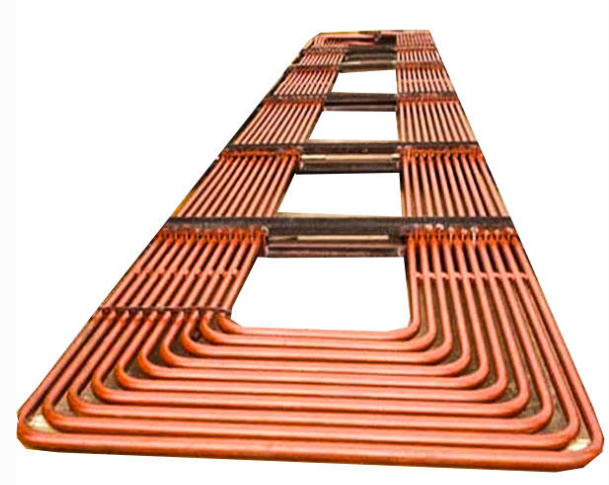
Super heater coils are core heat-exchange components of industrial boilers and heat recovery steam generators (HRSG). Widely used in power generation, petrochemical, chemical, and biomass energy industries, they play an irreplaceable role in converting saturated wet steam into high-temperature dry superheated steam. By raising steam temperature without increasing pressure, super heater coils effectively improve thermal cycle efficiency, avoid steam condensation, and protect downstream turbine equipment from water erosion, becoming a key guarantee for stable and efficient operation of thermal systems.
1. Core Working Principle of Super Heater Coils
Saturated steam generated by the boiler water drum contains a certain amount of moisture, which will cause blade abrasion, thermal efficiency reduction and even equipment failure when directly acting on steam turbines or industrial thermal equipment. Super heater coils adopt high-temperature heat exchange structure, absorb residual flue gas heat in the boiler furnace, and continuously heat saturated steam above the saturation temperature to form dry superheated steam.
The whole process realizes pure temperature rise and no pressure change of steam. It eliminates steam moisture, improves the enthalpy value of steam, and maximizes the energy utilization rate of fuel combustion. High-quality super heater coils can stably produce superheated steam up to 600°C, suitable for high-standard industrial production and power generation scenarios.
Note: 600°C is the typical maximum working temperature for commercial boiler superheater coils. The actual operating temperature shall be confirmed according to specific project parameters and manufacturer technical standards.
2. Main Types and Structural Characteristics
According to heat transfer modes and structural designs, super heater coils are mainly divided into three categories, which are selected for different boiler types and working conditions. Each type features unique heat absorption modes and application scenarios to adapt to diverse industrial operating environments.
2.1 Radiant Super Heater Coils
Arranged in the high-temperature furnace area of the boiler, it relies on furnace radiation heat transfer for heating. It features fast temperature rise, high heat transfer efficiency, and is suitable for high-load power station boilers. It can quickly adjust steam temperature and adapt to fluctuating working conditions.
2.2 Convection Super Heater Coils
Installed in the flue gas channel outside the furnace, it uses high-temperature flue gas convection for heat exchange. With stable heating performance and small temperature fluctuation, it is mostly used in industrial boilers with medium and low load requirements, and has strong operational stability.
2.3 Semi-radiant Super Heater Coils
It integrates the advantages of radiation and convection heat transfer, with balanced heating performance, wide load adaptation range, and is widely used in circulating fluidized bed boilers, biomass boilers and waste heat recovery equipment. It is also known as platen superheater in power plant engineering, serving as a key transition heating surface for boiler systems.
In terms of structure, most products adopt serpentine coil design, with customizable pipe wall thickness and diameter. Made of high-temperature and wear-resistant metal materials, they comply with international mainstream standards and support personalized customization of various specifications.
3. Super Heater Coils Type Comparison
| Coil Type | Heat Transfer Mode | Core Advantage | Applicable Scenarios | Operating Stability |
|---|---|---|---|---|
| Radiant Super Heater Coils | Furnace radiant heat | Fast temperature rise, high heat efficiency | High-load power station boilers | Medium, sensitive to load fluctuation |
| Convection Super Heater Coils | Flue gas convection heat | Stable temperature output, low fluctuation | Medium & low load industrial boilers | High, stable long-term operation |
| Semi-radiant Super Heater Coils | Mixed radiation & convection | Balanced performance, wide adaptability | CFB boilers, biomass boilers, HRSG | Excellent, multi-working condition adaptation |
4. Material & Industry Standards
4.1 Main Materials (Typical Range)
- Carbon Steel: SA210 A1/C, A192, A179, suitable for medium-temperature working conditions
- Alloy Steel: SA213 T11, T22, high-temperature oxidation and wear resistance
- Stainless Steel: TP304, TP316L, suitable for high-corrosion flue gas environments
Note: All material selection needs to match actual boiler temperature, pressure and flue gas corrosion conditions, subject to project technical confirmation.
4.2 Applicable Standards
Super heater coils are manufactured in accordance with ASME, ISO, EN and GB industrial boiler pressure component standards. All welding and forming processes comply with international boiler heat exchange component manufacturing specifications to ensure structural safety and pressure resistance.
5. Core Industrial Application Scenarios
As a key component of steam thermal systems, super heater coils cover almost all industrial scenarios that require high-quality superheated steam:
5.1 Thermal Power & Nuclear Power Plants
It is the core configuration of power station boilers. High-temperature and dry superheated steam generated by super heater coils drives steam turbines to generate electricity, effectively improving power generation efficiency, reducing equipment wear, and extending the service life of turbine blades, which is the foundation of stable power operation.
5.2 Petrochemical & Chemical Industry
Provide constant-temperature superheated steam for petroleum cracking, steam reforming and chemical reaction processes. Accurate and stable steam temperature ensures the precision of chemical reaction conditions and improves product yield and production stability.
5.3 Biomass & Waste-to-Energy Power Plants
Adapt to the flue gas characteristics of biomass combustion and waste incineration, efficiently recover waste heat, generate qualified superheated steam, realize clean energy conversion, and meet environmental protection and energy-saving production standards.
5.4 Food & Pharmaceutical Processing
Provide dry and pollution-free high-temperature steam for material sterilization, pasteurization and drying processes, avoid moisture residue affecting product quality, and meet the hygienic production standards of the food and pharmaceutical industries.
6. Key Advantages of High-Performance Super Heater Coils
- High Energy Efficiency: Fully utilize boiler flue gas waste heat, improve steam thermal cycle efficiency, reduce fuel consumption, and realize energy saving and emission reduction.
- Strong Equipment Protection: Eliminate steam moisture, prevent turbine and pipeline erosion and corrosion, reduce equipment failure rate, and extend the service life of thermal system equipment.
- High Temperature & Wear Resistance: Adopt high-grade alloy materials, with high-temperature oxidation resistance, wear resistance and pressure resistance, adapting to long-term high-load industrial operation.
- Strict Quality Control: All products undergo NDT non-destructive testing such as X-ray and gamma-ray to ensure welding seam quality and overall structural stability.
- Strong Customization: Support size, material and structural customization according to boiler parameters, steam temperature and pressure requirements, adapting to diverse working conditions.
7. Design & Selection Tradeoffs
When selecting super heater coils, engineers need to balance multiple performance factors to match actual boiler operating conditions:
- Temperature Resistance vs. Cost: High-grade alloy steel improves high-temperature corrosion resistance but increases procurement cost; carbon steel is cost-effective but only suitable for medium-temperature working conditions.
- Heat Efficiency vs. Ash Deposition: Dense serpentine tube structure improves heat exchange efficiency but is more prone to ash accumulation; properly optimized tube spacing reduces fouling risk with slight efficiency loss.
- Structural Stability vs. Adaptability: Fixed convection superheater structure is stable for long-term stable load operation, while semi-radiant type is more adaptable for fluctuating load working conditions.
8. Quality Inspection & Production Testing
All super heater coil products undergo strict factory inspection to meet pressure vessel and boiler component standards. The main testing items include:
- NDT non-destructive testing (X-ray, gamma-ray) for welding seam flaw detection
- Hydraulic pressure test to verify overall pressure resistance
- Tube wall thickness and dimensional tolerance inspection
- High-temperature oxidation resistance sampling test
- Surface anti-rust treatment and structural stability inspection
9. Packaging & Shipping Requirements
Super heater coils are precision boiler heat exchange components. Standard packaging adopts wooden box fixed packaging or skeletal container packaging to avoid tube bending, welding seam damage and surface abrasion during transportation. All products are fixed with anti-collision buffers, with complete product parameter labels and inspection documents. Sea freight and land freight delivery modes are supported for global project procurement.
10. Daily Maintenance & Fault Prevention Tips
Long-term high-temperature flue gas scouring easily causes scaling, wear and ash deposition on super heater coils, which affects heat exchange efficiency and even causes pipe burst accidents. Daily standardized maintenance is essential:
Regularly clean flue gas ash and surface scale on the coil surface to avoid heat transfer blockage; regularly detect pipe wall thickness and welding joints to check for wear, oxidation and cracks; adjust boiler combustion parameters to avoid long-term over-temperature operation; for high-corrosion working conditions, select anti-wear and anti-corrosion alloy materials or install protective shields to extend service life.
11. Frequently Asked Questions
Q1: What is the maximum working temperature of industrial super heater coils?
A: The typical stable working temperature of commercial super heater coils is up to 600°C, which covers most power plant and industrial boiler working conditions. Ultra-high temperature working conditions need customized alloy material solutions.
Q2: What is the difference between super heater coils and boiler water walls?
A: They are completely different boiler components. Super heater coils heat saturated steam into superheated steam, with steam inside the tubes; water walls are evaporative heating surfaces with water inside, used for generating saturated steam and protecting furnace walls.
Q3: Which type of super heater coil is suitable for biomass boilers?
A: Semi-radiant super heater coils are the most suitable choice, with balanced heat transfer performance and strong adaptability to the complex flue gas environment of biomass combustion.
Q4: Can super heater coils be customized?
A: Yes. Lordfintube supports full customization of pipe diameter, wall thickness, material, structural size and processing standards according to customer boiler parameters and project requirements.
Q5: What quality tests do your super heater coils pass?
A: All products pass strict NDT non-destructive testing, hydraulic pressure test and dimensional inspection, complying with ASME and international boiler component manufacturing standards.
12. Conclusion
Super heater coils are not only a key component to realize steam superheating, but also a core factor to determine the operating efficiency and safety of industrial boiler systems. With the upgrading of industrial energy conservation and thermal system precision, high-temperature resistant, high-efficiency and customized super heater coils have become the mainstream choice of power, chemical, new energy and other industries. Reasonable type selection, standardized use and scientific maintenance can maximize the value of equipment, reduce operating costs, and create stable and efficient production benefits for industrial enterprises.
Need Custom Super Heater Coils for Your Boiler Project?
Request a Quote