


What types of shell-and-tube heat exchangers are there?
What Exactly Is a Shell and Tube Heat Exchanger?
Put simply, a shell and tube heat exchanger is a cylindrical pressure vessel containing a bundle of tubes. One fluid runs through the tubes (tube side), and another fluid flows around them inside the shell (shell side). Heat moves through the tube walls from the hotter fluid to the cooler one.
So, what makes it different from other types?
- Plate heat exchanger -- Uses gasketed plates. More compact, but doesnt handle high pressures or temperatures as well.
- Air-cooled exchanger -- Uses air instead of a liquid on the shell side. No cooling water needed, but less efficient in many cases.
- Shell and tube -- The workhorse. Tough, handles high pressures and temperatures, and (depending on the design) you can clean it mechanically. Preferred in refineries, chemical plants, and power stations.
How Much Pressure Can a Shell and Tube Heat Exchanger Take?
A lot. Typical designs go from full vacuum up to 30 bar (435 psi) without breaking a sweat. With thicker walls and stronger materials, we can go well above 100 bar (1,450 psi). Heres a rough guide:
- Low pressure: 3–10 bar -- general process heating/cooling
- Medium pressure: 10–30 bar -- steam, gas processing
- High pressure: 30–100+ bar -- hydraulic systems, supercritical fluids
The exact rating depends on shell diameter, material (carbon steel, stainless, titanium), tube thickness, and how the tubes are attached (welded or expanded).
Three Main Types Youll Encounter
Depending on how the tubesheet connects to the shell -- and whether you can pull the tube bundle out -- there are three standard designs:
- Fixed tubesheet
- U-tube
- Floating head
Lets look at each one.
1. Fixed Tubesheet
Both tubesheets are welded right to the shell. You cannot remove the tube bundle.
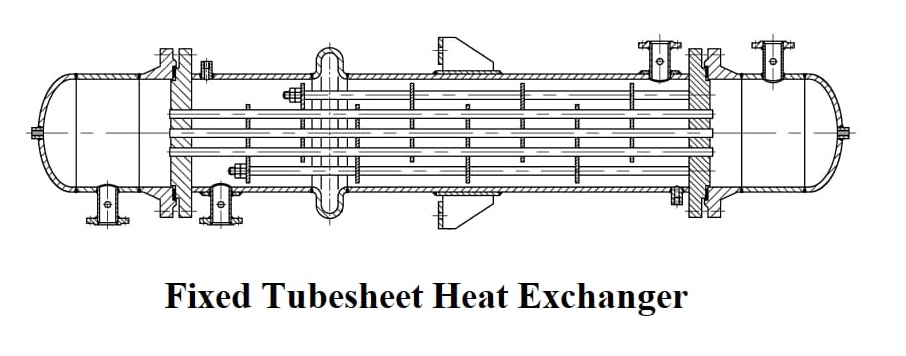
Whats good about it?
Cheapest option, compact, no internal gaskets to leak.
Whats not so good?
You cant mechanically clean the shell side. Thermal expansion is limited -- you might need an expansion joint.
Where it works best:
Clean fluids on both sides, small temperature differences.
Note: A fixed tubesheet design is economical but requires clean shell-side service.
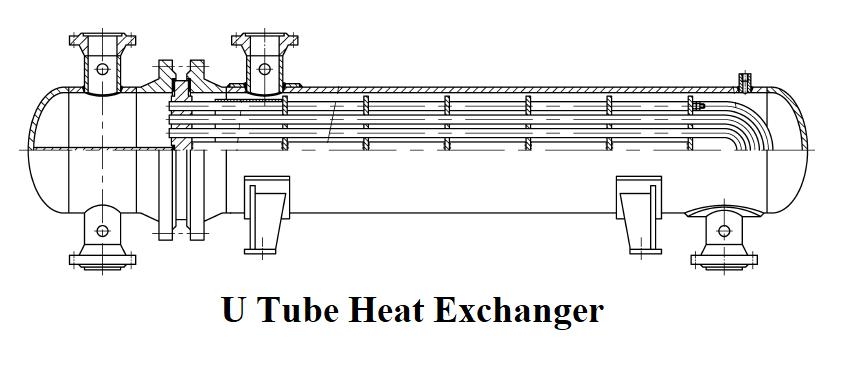
2. U-Tube Heat Exchanger
Each tube is bent into a U shape, and both ends are fixed to a single tubesheet. The bundle can slide freely inside the shell.
Advantages:
Handles large temperature differences with ease. The bundle can be pulled out for maintenance.
Disadvantages:
Cleaning the inside of the U-bends is tricky. Not ideal if the tube side fluid fouls heavily.
Tube options -- and this matters:
You can use bare (smooth) tubes for clean services, or low‑finned tubes to boost heat transfer area. Low fins are especially useful when one fluid has a poor heat transfer coefficient -- like oils or hydrocarbons. The fins are rolled onto straight tubes before bending, so U-tube design is a natural fit for finned tubes.
Best applications:
Large temperature differences, moderate fouling, and jobs where you want to add fins for better performance.
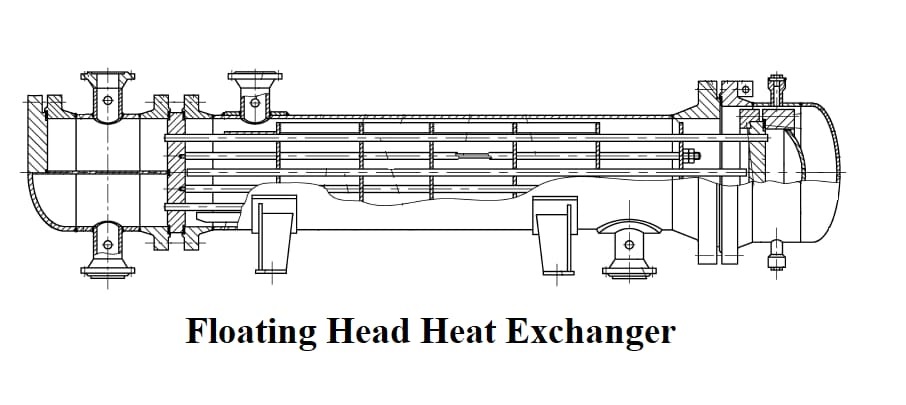
3. Floating Head Heat Exchanger
One tubesheet is fixed at the end; the other "floats" inside the shell. That allows the whole tube bundle to expand freely -- and you can pull it out completely.
Pros:
You can mechanically clean both shell and tube sides. Handles heavy fouling and big temperature swings.
Cons:
More expensive, more complex, takes up more space.
Best for:
Slurry services, crude oil preheaters, any application that needs frequent cleaning.
A floating head exchanger is the top choice when mechanical cleaning is mandatory.
Quick Comparison: Fixed Tubesheet VS U-Tube VS Floating Head Type
| Feature | Fixed Tubesheet | U-Tube | Floating Head |
|---|---|---|---|
| Bundle removable | No | Yes | Yes |
| Shell-side mechanical cleaning | No | Yes (with reasonable access) | Yes |
| Handles thermal expansion | Poor (needs bellows) | Excellent | Excellent |
| Relative cost | Low | Medium | High |
| Typical pressure rating | Up to 30+ bar | Up to 30+ bar | Up to 30+ bar |
| Can use low‑finned tubes? | N/A | Yes (bare or finned) | N/A |
Clean fluids, tight budget
→ Fixed tubesheet
Big ΔT, some fouling
→ U-tube (consider low‑finned tubes for viscous fluids)
Heavy fouling, regular cleaning
→ Floating head
At Lord Fin Tube, we build all three configurations. Materials range from carbon steel and stainless 304/316 to titanium. And we offer finned tubes -- low‑fin, high‑fin, integral -- to get more heat transfer out of the same footprint.
Frequently Asked Questions (FAQ)
Need a heat exchanger tailored to your process? Reach out to Lord Fin Tube for expert support.